|
|
Sri Lanka's
Gem Buying 1
Page 1
2
3 4 5 Next>>
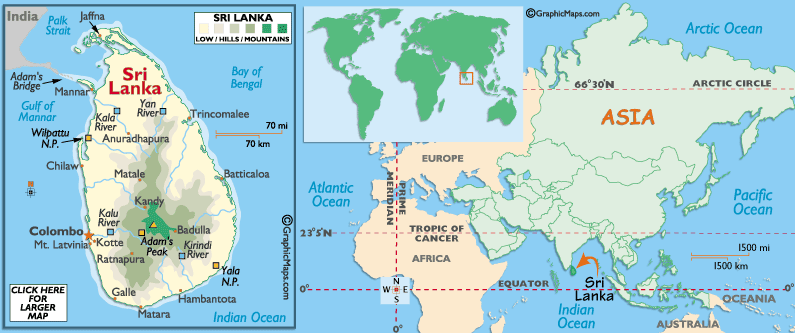
Sri Lanka, (officially
the Democratic Socialist Republic of Sri Lanka known as
Ceylon before 1972, Serendib,
Taprobane, whatever you want to call it), is an island nation
in South Asia,
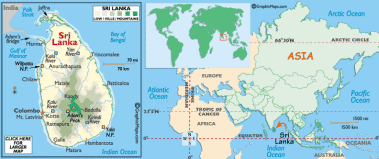 located
about 31 kilometers (19.3
miles) off the southern coast of India.
Popularly referred to as the Pearl of the Indian Ocean,
it is home to around twenty-one million people.
Sri Lanka is a Sinhalese word that translate as
'resplendent land'. The land of the finest unheated sapphires, cat's eyes, alexandrites,
spinels, star sapphires, garnets, aquamarines, amethysts and many other gem varieties.
Ratnapura, or "city of gems" is the locality with the most
concentration of gem mining. located
about 31 kilometers (19.3
miles) off the southern coast of India.
Popularly referred to as the Pearl of the Indian Ocean,
it is home to around twenty-one million people.
Sri Lanka is a Sinhalese word that translate as
'resplendent land'. The land of the finest unheated sapphires, cat's eyes, alexandrites,
spinels, star sapphires, garnets, aquamarines, amethysts and many other gem varieties.
Ratnapura, or "city of gems" is the locality with the most
concentration of gem mining.
Ratnapura lies 101 Km Southeast of Colombo. The scenic route takes
you passing paddy fields, rubber plantations and tea estates.
Throughout history, Sri Lanka has been known as a land of gems.
King Solomon was said to have procured a great ruby for the queen
of Sheba from Ceylon. Marco Polo (1293 AD) wrote about the ruby
that once graced the Ruwanweliseya Dagoba at Anuradhapura..."a
flawless ruby a span long and quite as thick as a man's fist".
Sri Lanka has produced three of the world's largest blue
sapphires, including the 'Blue Bell' which adorns the British
crown and the 'Star of India', displayed at the New York Museum of
Natural History.
A visit to one of the museums or many gem workshops will give
you the opportunity to see a variety of precious stone, such as
rubies, sapphires, cat's eyes, alexandrites, aquamarines,
tourmalines, spinels, topaz, garnets, amethyst, zircons etc.
Ratnapura
is situated at the foot of the 2243 metre high
Adam's Peak. All four major religions claim Adam's Peak as
a holy mountain. Buddhists call the mountain Sri Pada (the sacred
footprint), or Samanalakande (Butterfly Mountain) and believe the
Lord Buddha has visited the mountain and set his sacred footprint.
Hindu's say it's Lord Shiva's and Muslims believe that it is the
place where Adam first set foot on earth, after being cast out of
heaven. Catholics say it is of St. Thomas' the Christian Apostle
who preached in South India.
Ratnapura is also the starting point for the 'Classic' Hard
route up Adam's Peak, via Gilimale and Carney estate. The
Pilgrimage season starts on Poya (full moon) day in December and
runs until the start of the South-West Monsoon in April. It has
been a pilgrimage centre for over a 1000 years. King Parakramabahu
and King Nissanka Malla of Polonnaruwa provided ambalamas or
'resting places' for weary pilgrims along the mountain route. The
other more popular route is through Dalhousie (pronounced
'Del-house') close to Dickoya.
But let's talk about the gems of
this beautiful land. A
gemological summary in few words...very little unheated material is available in
Sri Lanka as per 2008. I would estimate that unheated sapphires counted for less
than
2% of the sapphires we were offered to. Especially unheated yellow sapphires
were very scarce and an all time high in price. White and pink sapphires also were
particularly expensive, due to very little availability and strong demand. On the other hand, we
always have a good
time, beautiful weather, plenty of delicious tea, and tasty rice & curry .
And always a sincere and radiant smile directed to us. A warm thank
to all the people that make our yearly stay
so pleasant!.
|
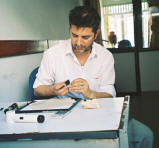
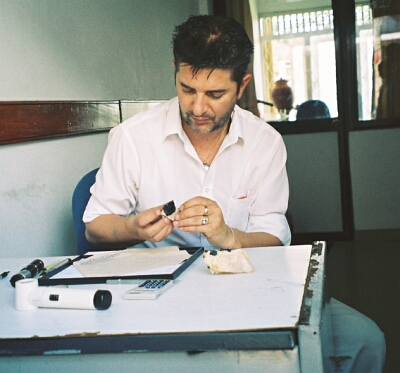
RC at the gem market in Ratnapura, viewing a tourmaline
macle crystal in calcite matrix. |
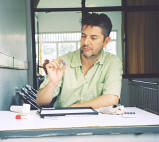
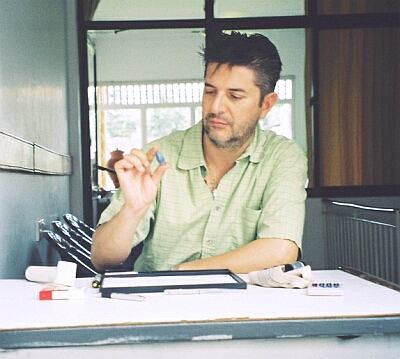
RC examines a huge, gorgeous, perfectly
terminated, unheated blue sapphire crystal at the Ratnapura gem market.
Usually a perfect crystal like this is never faceted or heat treated and
sold "as is" to collectors for very high prices.
|
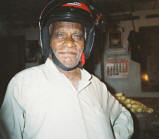
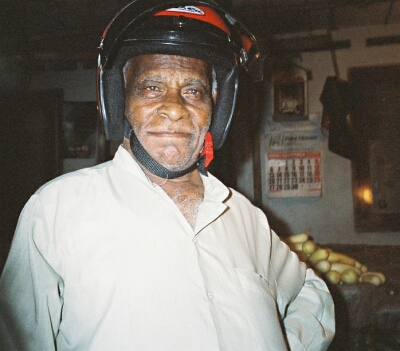
A Sri Lankan "dare devil". 3-wheels and motorcycles are
great means to go places in Sri Lanka.
|
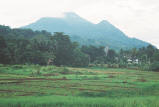
Ratnapura countryside. During November (the period this
photo was taken), in this
interior part of the country, it is sunny in the morning, then it gets
cloudy in the afternoon with rainy evenings and part of the night. Mining
is therefore stopped. |
|
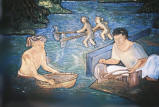
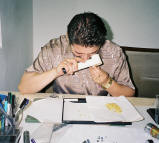
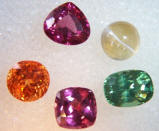
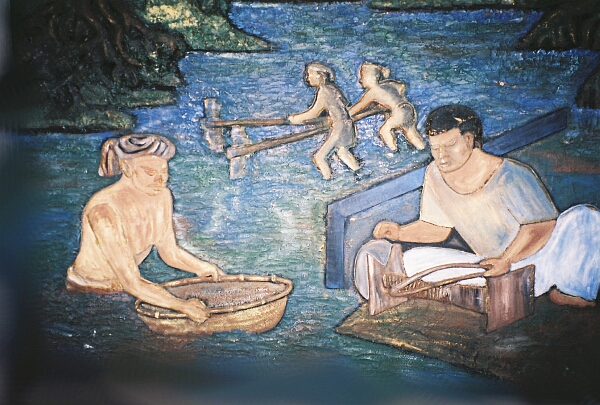
Left. A beautiful, painted mural at the shop of our miner
friend. It portraits the river mining, gravel washing and cutting process
that Sri Lankans have used and are still using nowadays since unmemorable
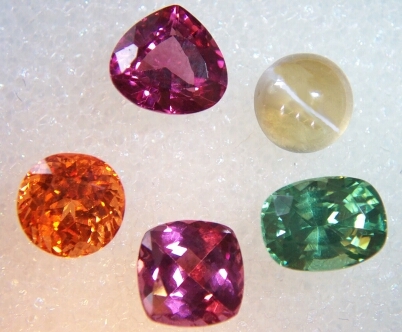
time. Middle. RC louping a parcel of yellow sapphires. Right.
A colorful example of Sri Lankan gemstones that are not sapphires. |
|
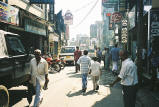
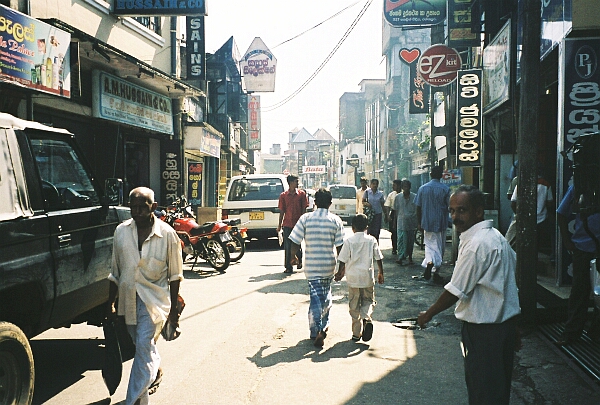
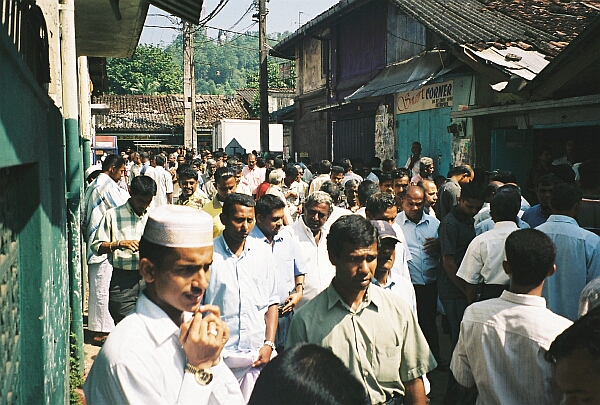
Main Street in Ratnapura. Ratnapura translates as the "City of Gems". |
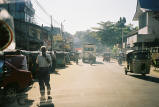
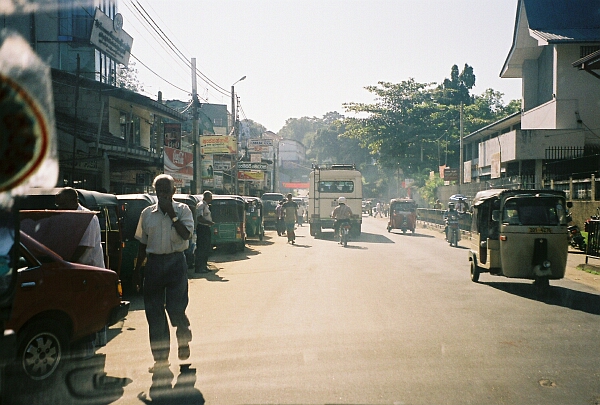
Ratnapura street
|
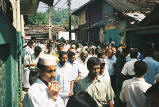
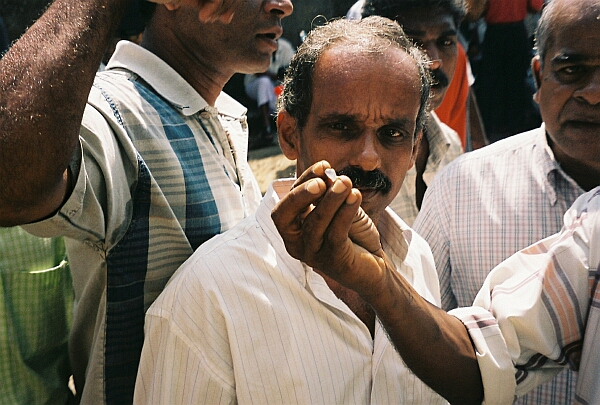
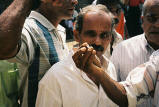
Morning 10:00 AM of every day. Hundreds of people gather to trade gem rough in
Ratnapura. |
A piece of white sapphire rough. |
|
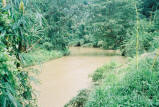
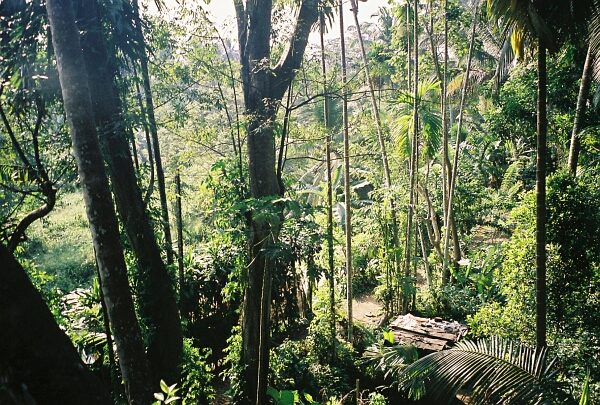
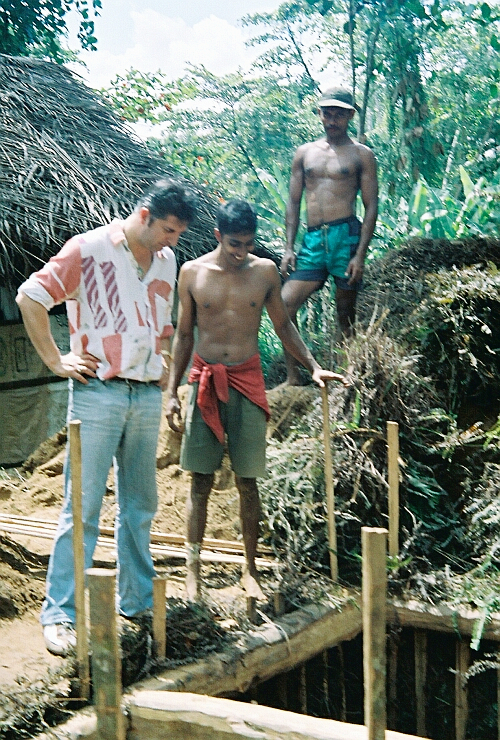
Lush vegetation nearby a gem mine outside Ratnapura.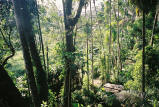 |
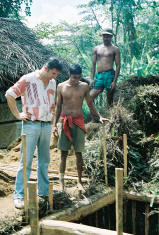
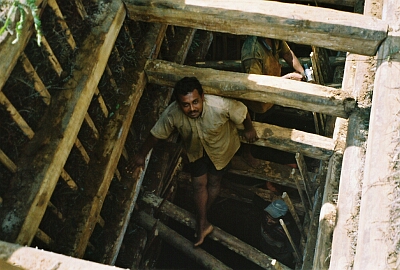
Looking down into a mine pit. Usually these pits are
50-60 feet deep. The temperature at the mine site is around 100�,
extremely hot and humid. |
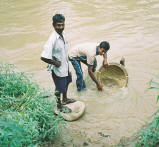
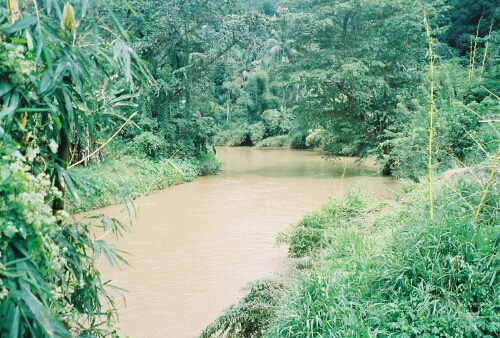
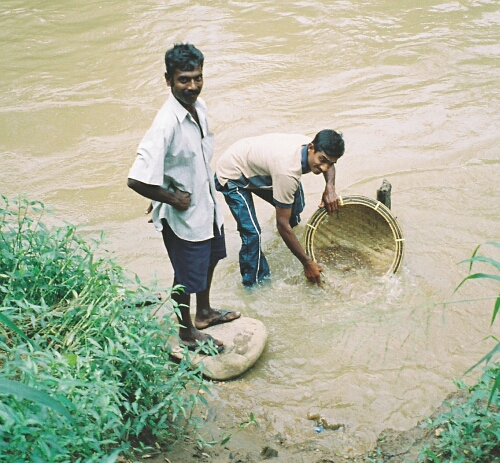
Gem gravel washing at the river banks. These methods
have remained unvaried since the beginning. |
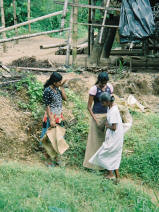
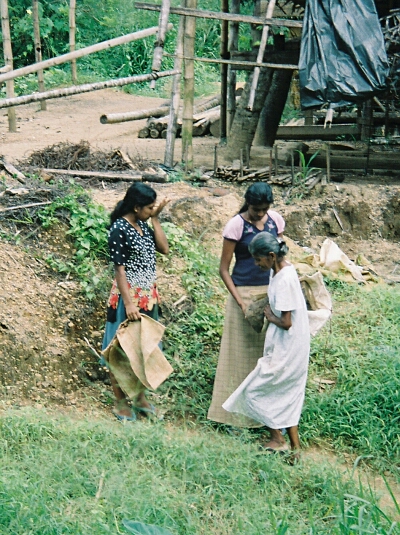
Women from a nearby village come to get rubber wood, at
the mine site for domestic purposes. |
|
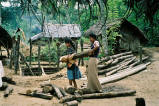
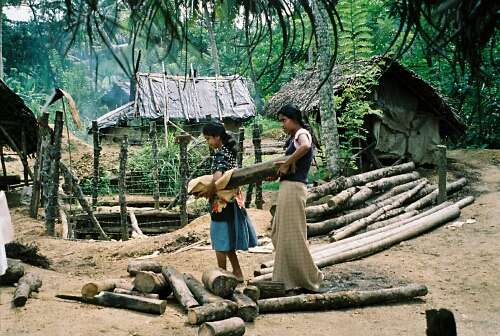
Girls carrying rubber wood remains back to the village. |
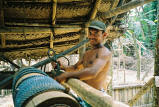
Mine worker. Sri Lankans always smile... |
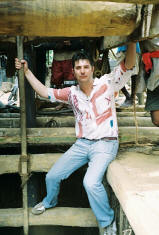
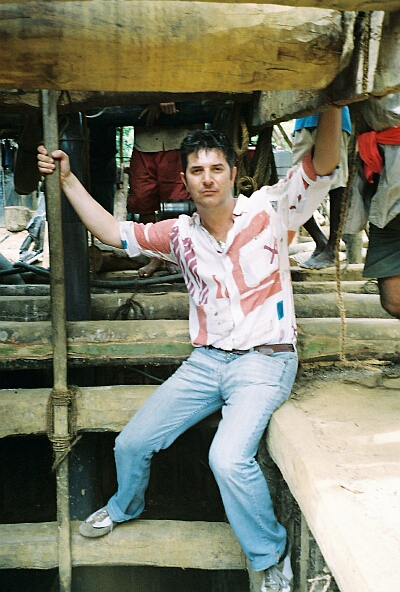
RC starting descending a mine pit. A very cool change is
experienced in descending the pit. |
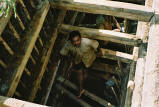
Mine workers stuffing the walls of a new mine with "Kakille"
(not sure about the spelling), bush-like, tree leaves. |
Page 1
2
3 4 5 Next>>
|