|
|
|

|
Red Coral Gemstone for Jyotish and Vedic Astrology |
|
Red coral
known as Moonga or Praval is the
Jyotish gemstone related to Mars -
Mangal which is the planet of ambition, motivation and desire. Red coral
gemstone is life
giving and invigorating. Turns inactive persons into
active ones, helps build finances, increases determination, courage,
vitality, energy and physical strength. It boosts leadership qualities, and helps
one to finish the tasks he has begun.
Wearing a fine red coral of at
least 2 carats is said to remove obstacles, win you
over your enemies, purify the blood and cure boils.
It
will make the wearer courageous yet prudent. Red coral helps defeat mental depression, and it protects women from widowhood.
It can help one get a daughter married or to find a new job.
It can help marital life and to
increase sexual desire, especially in men.
Red coral can be substituted with carnelian of at least 5
carats.
If you want to know more about
astrological and healing
benefits of red coral, click
here.
Important:
Important:
The following pictures are highly magnified
(30X)
and do not show the gems' real
size. Color and
brilliance
can greatly vary from computer to computer, depending
on your monitor's settings.
Color will also, naturally, vary from sunlight to indoor, incandescent light. Dark and lighter
areas are effects from the digital camera. See description for accuracy
on clarity grade, color and exact dimensions in mm.
|
|
|
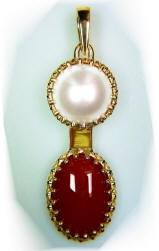
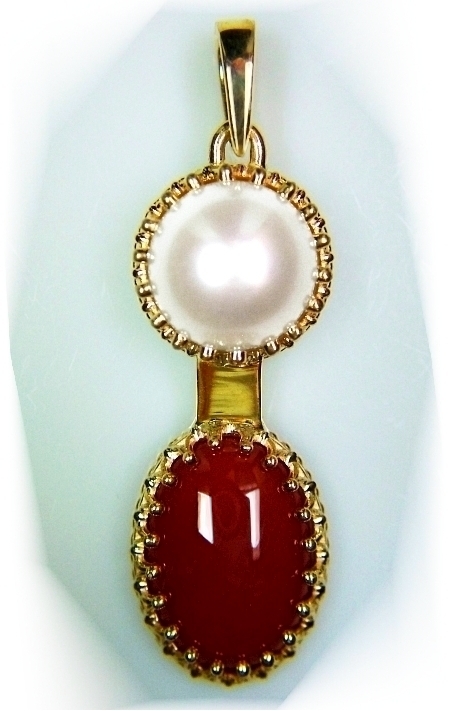
Very beautiful,
modernly essential, 14KY gold, Moon and Mars, astrological talisman.
$990/talisman
|
A most definitely auspicious, and beautiful, Moon
& Mars, astrological, Vedic talisman, showcasing a natural,
freshwater, not beaded pearl weighing 6.72 cts., fine white color,
10mm round in shape, with flawless skin and good luster, from
unknown river/lake of China. The Mediterranean ox-blood, untreated
coral (not dyed, not polymer filled) weights 3.15 cts., fine, rare,
ox-blood color, perfectly executed, oval cabochon shape, and
measuring 14x10mm, top mirror finish and polish, from the southern
coasts of Sardinia, Mediterranean Sea. The
pendant is 38mm
long, including the bail. Sturdy, well made, this is one of our
classic Vedic pendants, that is ready to go and sure to uplift your
life and at the same time, please your eyes. |
|
|
|
|
|

One-of-a-kind, spell
binding, 14K yellow gold, Italian red coral pendant with tsavorites and Mali
garnets.
$1,080/pendant
|
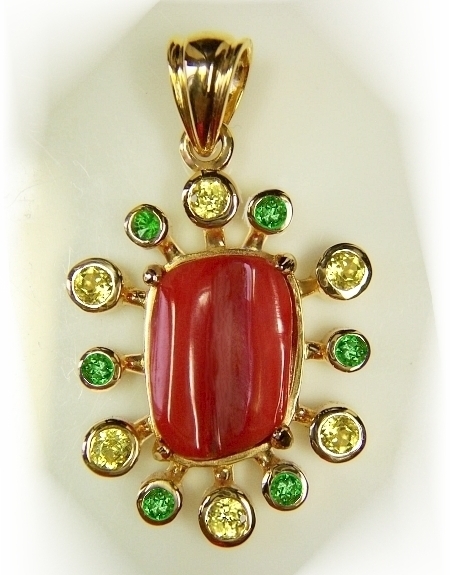
Something
unique for the unique you. This is a very well crafted, substantial,
hand-made, 14K yellow gold red coral pendant, 6.39
grams of gold, featuring a natural, untreated, free form Sardinian red coral weighting 4.95
cts., ox-blood red color,
good surface and polish,
measuring 16.00 x 11.10mm, accompanied by a
total of 1.19 cttw. of untreated, tsavorites and Mali garnets
(garnets are never treated), arranged in circular, sunburst design
all around, all bezel set. The pendant total length is 40mm in length, including the bail,
(which can accommodate any size chain)
and 25mm wide. Absolutely gorgeous, solid designer jewel that can be
used to propitiate the favor of Mars. Main stone is open on the back
for astrological, Jyotish use. |
|
|
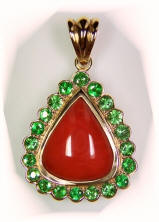
One-of-a-kind,
alluring,
14K yellow gold,
Italian red coral and tsavorites pendant.
$1,125/pendant
|
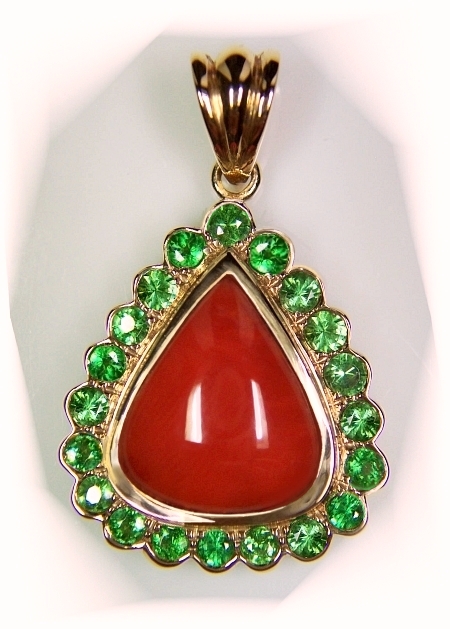
A very beautiful,
solidly well crafted & utterly unique, Italian red coral and tsavorite
garnets pendant, mounting a center, bezel set, untreated,
Mediterranean red coral, weighting 3.56 cts., fine "tomato" red
color, excellent, drop shape cabochon with flat bottom, and
measuring 13x11mm, good surface and polish. Around the perimeter of
coral, bead set, there are 20 pcs of untreated, Kenyan tsavorite garnets,
approx. 1.75 cts. total, 2.3-2.5mm rounds, all eye clean and with a
vibrant, medium, "fern" green color. Striking eye appeal in a well
balanced combinations of colors. The pendant measures approx. 30mm
(including the bail) in length and x 20mm wide. Really very nice. |
|
|
|
|
|
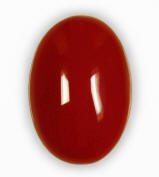
Alluring & perfect,
excellent color, untreated, Mediterranean Sardinian ox-blood coral.
$90/ct
$285/gem
|
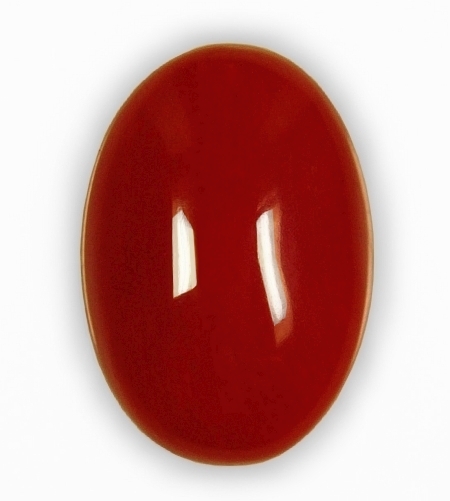
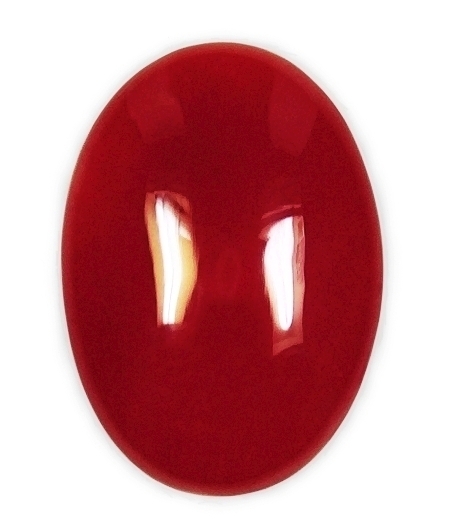
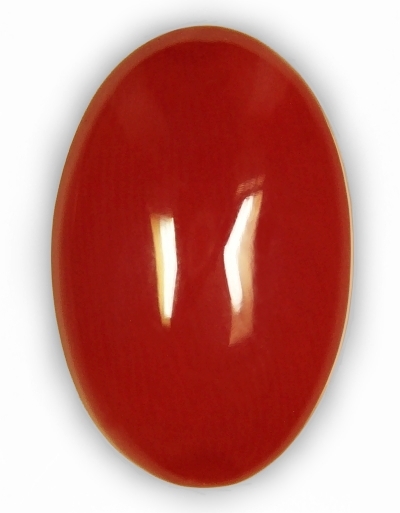
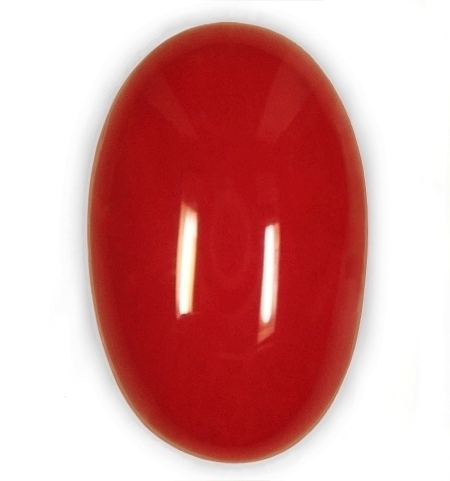
Lovely, Mediterranean (Italian) red
coral, weighting 3.17 cts.,
ox-blood red color, perfectly executed, oval cabochon cut, and
measuring 13 x 9mm, clean and blemish free surface, with fine mirror
finish, hailing from off the coasts of Alghero, North-Western
Sardinia, Mediterranean sea. Alghero is the capital of the "riviera
del corallo", whose name derives from the fact that the coastline
waters off the city, in the Sardinian sea, has one of the largest
concentration of precious coral (corallium rubrum) in all the
Mediterranean basin. Auspicious and beautiful, untreated Italian red
coral to harness the power of Mars. |
|
|
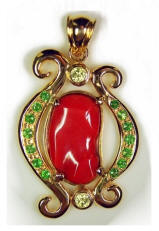
One-of-a-kind, exquisite, 14K
yellow gold, Italian red coral pendant with tsavorites and Mali
garnets.
$1,140/pendant
|
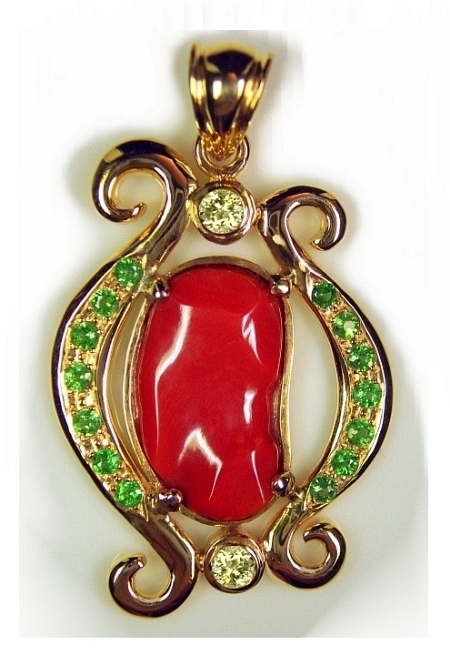
Super gorgeous, perfectly well crafted &
hand-made, very large 14K yellow gold
red coral pendant,
6.89 grams of gold,
featuring a natural, untreated,
free form Sardinian red coral weighting 5.30 cts, medium, vivid orange-red color, measuring
19.72 x 11.1mm,
good surface and polish,
accompanied by 1.02
cttw. of Kenyan green tsavorites and Mali green-yellow garnets
(garnets are never treated), bead and bezel sets in the gold
shoulder around the center stone. The pendant total length is 45mm in length, including the
large bail, (which can accommodate any size chain)
and 27mm wide. Needless to say, this is a very beautiful,
one-of-a-kind designer, astrological jewel to harness the power of
Mars. |
|
|
|
|
|
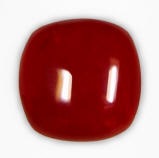
Magical, top finest
ox-blood red, untreated, Mediterranean Sardinian ox-blood coral.
Rare color.
~Sold!~
|
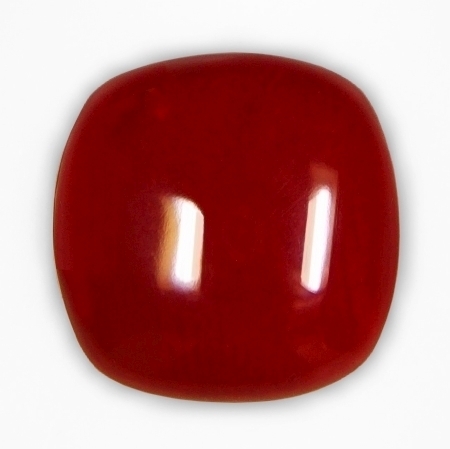
Awesome, Sardinian, untreated red coral,
weighting 4.56 cts., with finest ox-blood red color, very well
executed, antique square cushion, cabochon cut, measuring 12 x 12mm,
very clean surface with fine mirror finish, hailing from off the
coasts of Alghero, North-Western Sardinia, Mediterranean sea. If you are
looking for a fine, completely untreated ox-blood coral of rare
shape, we have already designed a pendant for it. Do not
delay on this piece. Rare. |
|
|
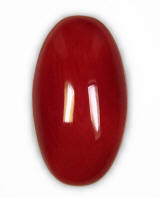
Sensuous, slender
shape, untreated, Mediterranean Sardinian ox-blood coral. Real
nice.
$110/ct
$680/gem
|
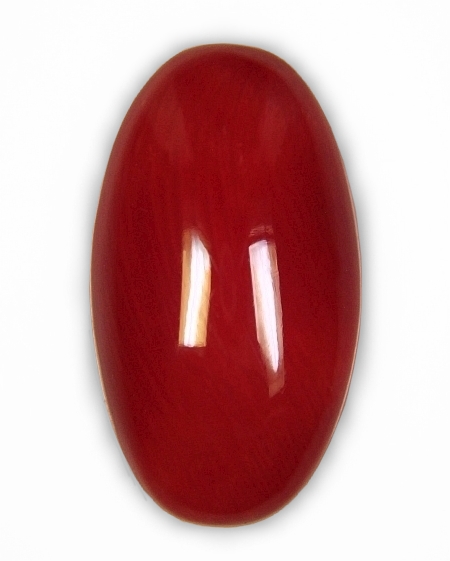
Perhaps a smaller version on the one on the left,
this Mediterranean, Italian red coral weights 6.18 cts., medium,
ox-blood red color, slightly elongated, oval cabochon cut, measuring 18 x 10mm,
fine
clean surface with top mirror
finish,
from
the coral banks off the coasts of southern
Sardinia, Mediterranean Sea.
Beautiful red coral that will mount perfectly in a ring. Ask for
your personalized and costumed, astrological, Mars talisman. |
|
|
|
|
|
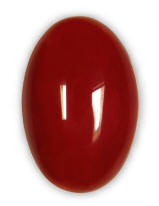
Gorgeous, perfect
size, fine color, untreated, Mediterranean Sardinia ox-blood
coral.
~Sold!~
|
A striking, untreated, Mediterranean red coral
cabochon, weighting 6.81 cts., top ox-blood red color, masterly
executed, oval cabochon cut, and measuring 18 x 12mm, fine
clean surface with top mirror
finish,
from
the coral banks off the coasts of southern
Sardinia, Mediterranean Sea.
Absolutely fine ox-blood color in a clean texture and marvelous cut,
this red coral will not fail to impress. Definitely to gain the
favors and appease the energy of Mars. |
|
|
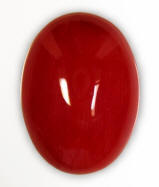
Very beautiful, good
size, untreated, Mediterranean, Sardinia ox-blood coral. Getting
rare.
$100/ct
$542/gem
|
Another beautiful, untreated red coral, hailing
from the Mediterranean sea, weighting 5.42 cts., medium ox-blood red color,
masterly executed, oval cabochon cut, and measuring 15 x 11mm, fine
clean surface with top mirror
finish,
from
the coral banks off the coasts of southern
Sardinia, Mediterranean Sea.
We choose our red corals for clean, blemish free tops, fine cutting
with no overly high domes, and of course absence of treatments such
as dyeing and polymer filling to conceal nicks and cracks. Buyer
beware of Indian quality, barrels and triangular shape corals. It is
mostly treated. |
|
|
|
|
|
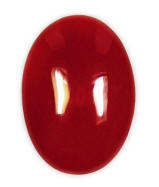
Immaculate,
perfection, untreated, Mediterranean Sardinia ox-blood coral.
Real nice and affordable.
$90/ct
$310/gem
|
A most perfect, untreated, Mediterranean red
coral cabochon, weighting 3.44 cts., ox-blood red color, excellent,
oval cabochon cut, and measuring 14 x 10mm, clean surface with top
mirror finish, from off the coasts Southern Sardinia, Mediterranean
sea. This precious coral simply exudes perfection from every angle.
Great color, rare and clean material with a calibrated shape, so we
can set it inexpensively in a gold, "crown" pendant for you. Real
nice and affordable. |
|
|
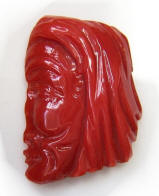
Captivating,
one-of-a-kind, untreated, Mediterranean ox-blood coral, hand
made carving. No reserve.
$1,280/carving
|
What an unique red coral
carving. None like it. This Sardinian ox-blood coral carving
weights a great 27.64
carats total, top, finest ox-blood red color, great texture and finish, it
measures 19
x 12 x 7.5mm, needless to say hand carved to perfection by a master
incisore of Torre Del Greco, Italy. Use it for an unique
pendant/brooch or ad it to your collection, this is simply a piece
of art. Priceless. Hard-to-get quality. |
|
|
|
|
|
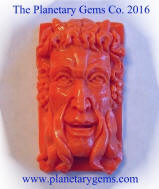
Absolutely gorgeous,
one-of-a-kind, untreated, Japanese coral, hand made carving.
$2,400/carving
|
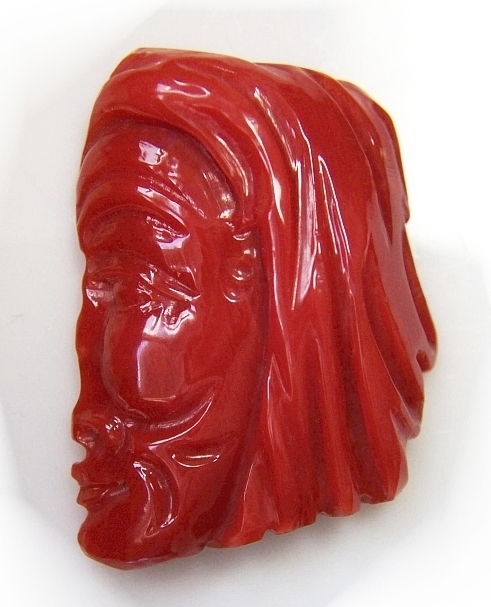
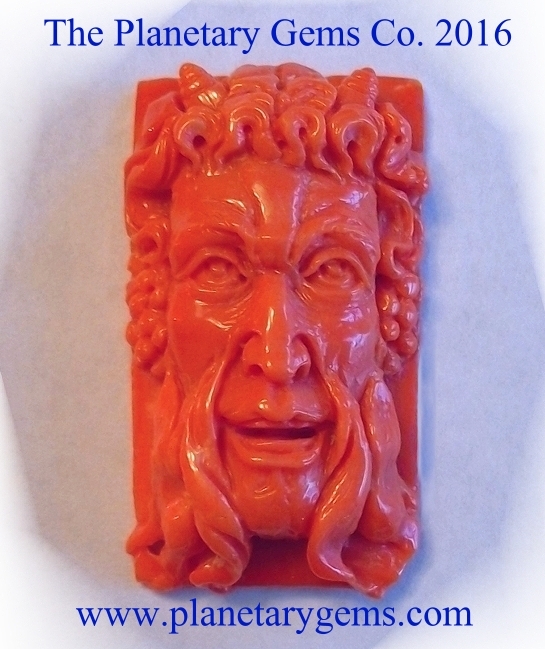
Fresh from our last trip
to the Mediterranean coral center of Torre Del Greco, Italy, here is
a super gorgeous, one-of-a-kind, untreated, Japanese origin, coral carving
representing a mythological faun or satyr, weighting 58.20 cts.,
medium, pinkish-orange color, measuring approx. 38 x 21 x 10mm,
superbly and masterly hand crafted by one of the oldest, living "
maestro incisore" of Torre Del Greco, Italy. Ideal for an unique,
artistic pendant. Here creativity is the key in setting it. The
coral is of Japanese origin, and it is completely untreated. Offered
at a great, wholesale price, but in truth, definitely priceless. No
reserve. |
|
|
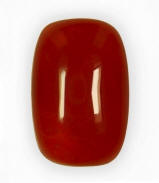
Beautifully shaped,
surely auspicious, untreated, Japanese ox-blood
coral. Real nice and affordable.
$100/ct
$272/gem
|
Very lovely, top color, untreated, Mediterranean
red coral, weighting 2.72 cts., fine ox-blood red color, perfectly
executed, antique cushion cabochon cut
(with flat bottom), measuring 12x8mm, clean surface with top mirror
finish, from off the coasts of Ryukyu island, Japanese Sea. This ox-blood color is simply not available
anywhere. We are the only source to stock strictly untreated, not
dyed and not polymer filled, Japanese and Mediterranean ox-blood red coral. Very
nice cabochon, unique in shape, cut for large appearance, with
delightful eye appeal. Rare from these waters. |
|
|
|
|
|
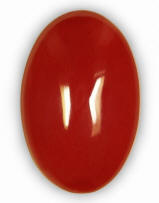
Amiable, perfectly
cut for large appearance, untreated, ox-blood, Mediterranean red coral
cabochon.
$100/ct
$369/gem
|
A very beautiful, untreated, Mediterranean red
coral, weighting 3.69 cts., ox-blood red color, masterly executed,
oval cabochon shape, cut for large appearance (large face), and
measuring 14 x 9.2mm, fine
clean surface with top mirror
finish,
from
the coral banks off the coasts of southern
Sardinia, Mediterranean Sea.
This quality is becoming increasingly hard to get. We pick only the
cleanest, darker and most perfect material available, cherry picked
from large lots
manufactured by one of
the oldest coral producer of the Mediterranean area. This is the
very best available and offered at the most competitive price on the
market. |
|
|
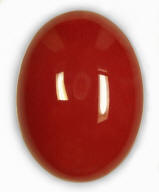
Spell-binding,
pristine & perfect, good size, untreated, ox-blood, Mediterranean
red coral cabochon.
$100/ct
$702/gem
|
Good size and surely captivating, untreated,
Mediterranean red coral, weighting 7.02 cts., medium ox-blood red color,
perfectly executed, oval cabochon cut, and measuring 16 x 12mm, fine
clean surface with top mirror
finish,
from
the coral banks off the coasts of Western
Sardinia (Alghero) Mediterranean Sea.
Old stock, large size, classic coral color, and simply perfection in
every sense. If you are looking for an auspicious red coral to
propitiate Mars, you have to consider this one. We are the source
for fine quality, Jyotish , Vedic natural gemstones and
one-of-a-kind designer talismans for the discerning souls. Because
you are unique. |
|
|
|
|
|
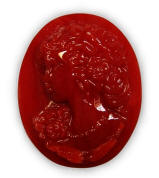
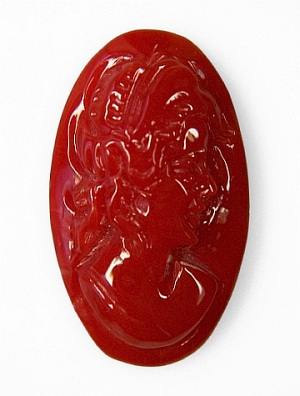
Feminine,
one-of-a-kind, untreated, Mediterranean red coral "cameo"
carving.
$100/ct
$558/gem
|
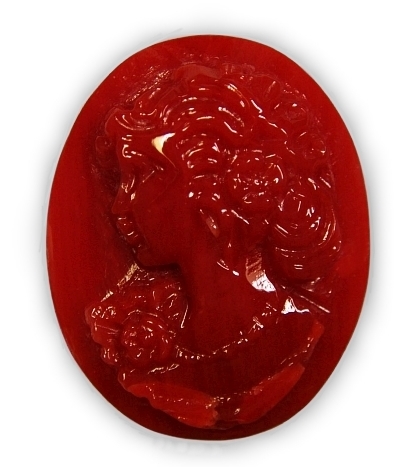
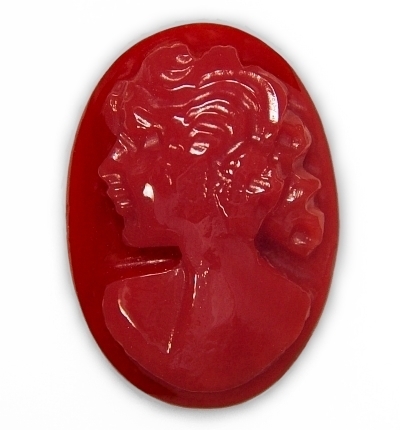
A most beautiful, untreated, Mediterranean red
coral cameo, weighting 5.58 cts., ox-blood red color, masterly
carved with exquisite details, measuring 16.90 x 13.63mm, good
texture & polish, from off the coast of Southern Sardinia,
Mediterranean Sea and carved in Torre Del Greco, Italy. We
specialize in completely natural, untreated, meaning not dyed and
not polymers filled, Mediterranean and Japanese Aka red corals. Not
an easy task, as it is estimated that 95% of the coral on the market
is treated in some ways. It will mount very feminine and
one-of-a-kind. |
|
|
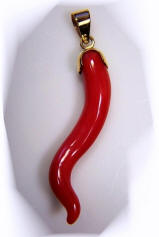
14K yellow gold,
ox-blood, Mediterranean coral "corno". Unique, very wearable,
protective talisman.
$399/pendant
|
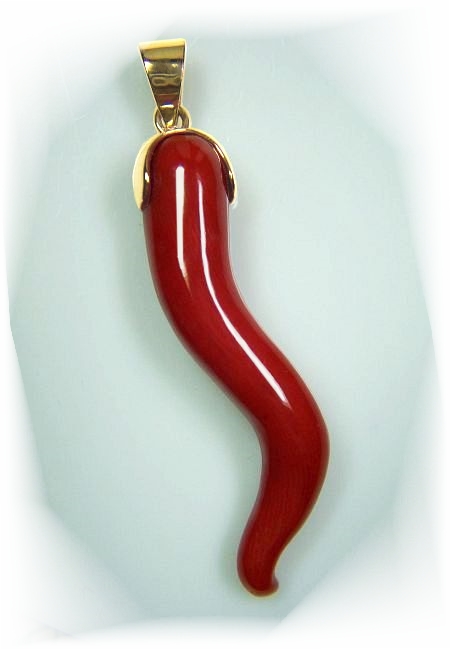
We love these red coral
pendants. And completely natural. Very unique and of conspicuous size, this 14K yellow gold
pendant red coral "corno" weights 9.93
cts. total weight (the red coral itself weights 8.16 cts.), 1 5/8"
long (including the bail) or 44mm, featuring a free form, untreated
(not dyed and not polymer filled) ox-blood coral, with clean surface
and fine high polish surface, hailing from off the coast of Western
Sardinia (Alghero), Mediterranean Sea. We picked the very best
and of great size from a huge parcel. Rest assured these are the
best available, and simply wear unique, exotic and captivating.
Great gift for yourself or your loved one. |
|
|
|
|
|
Red Coral
Info
Like
with every other gemstones we stock, we cherry pic the nicest,
flawless, completely untreated, ( which means natural in color and
without polymer filling), ox-blood Mediterranean & Japanese corals.
Coral comes in many colors, from white to light and medium pink, pink-orange, light
orange, orange, reddish orange, red, maroon red and black. The main,
worldwide trade & production center for coral is Torre Del Greco,
Italy. In this sunny little town, just south of Naples, rough
coral is imported from everywhere and worked locally by small family enterprises.
High
quality beads stands, cabochons, carvings, free forms are thus
produce to be sold to
designers and jewelry manufactures all over the world. ((This is the
finest, Italian designed & manufactured quality and not readily
available)). A decent, lower quality part of rough, is sold to India &
China. (Both countries are very avid buyer of coral). In India and
China,
coral will be shaped mostly in barrel and triangular shapes. And all
of it, will undergo treatments, both in dyed form and polymer
filling to conceal cracks and imperfections. In all, Beware of Indian and Chinese coral. |
|
|
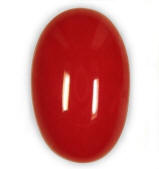
Charming, typical
Sardinia old stock, untreated, Mediterranean red coral cabochon.
$85/ct
$422/gem
|
Your classic, untreated, Mediterranean red coral,
weighting 4.97 cts., medium, ox-blood color, well executed, oval cabochon,
and measuring 14.45 x
9.33mm,
clean surface with top mirror
finish,
from
the coral banks off the coasts of southern
Sardinia, Mediterranean Sea..
This is an old stock with a lighter ox-blood red color, that is well
cut and priced very well. Becoming very rare, untreated red coral is
very difficult to get, as it is estimated that 95% of the coral on
the market is dyed and polymer filled. Buy with confidence here.
Cherry picked. |
|
|
|
|
|
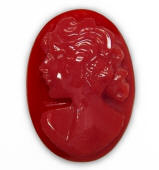
Sweet, well crafted,
untreated, Mediterranean red coral "cameo" carving.
$70/ct
$217/gem |
A very sweet, untreated, Mediterranean red coral
cameo, weighting 3.10 cts., ox-blood red color, well carved
with beautiful details, measuring approx. 14 x 10mm, good texture &
polish, from off the coast of Southern Sardinia, Mediterranean Sea
and carved in Torre Del Greco, Italy. The art of carving cameos in
shells and coral has been an exclusive of the "Torresi" or Torre del
Greco natives for a few centuries now. Unfortunately, it is a
disappearing art. This one is sweet, and offered at a very low
price. it will mount a standard 14x10mm "crown" pendant, like the
ones below. |
|
|
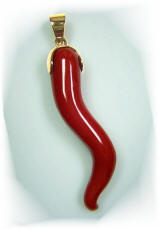
Large 14K yellow gold,
ox-blood, Mediterranean coral "corno". Unique, very wearable,
protective talisman.
$500/pendant
|
A very beautiful,
conspicuous in size,14K yellow gold, &
untreated, red coral pendant,
weighting
15.99 cts.
total weight
(red coral 13.68 cts.),
featuring a free form, untreated (not dyed and not polymer
filled) ox-blood coral, with clean surface and fine
high polish, hailing from the southern coast of Sardinia,
Mediterranean Sea. The pendant is a great 1 3/4" long (or 46mm).
Absolutely beautiful & unique to the eye, this one wears very well.
Of ancient Italian origin, this natural form, coral shape pendant is said to
protect the wearer from adversities and bad Karma. |
|
|
|
|
|
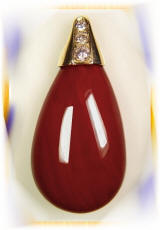
Royal one-of-a-kind,
high quality, incredible size, 18KY ox-blood coral & diamond
pendant. No reserve.
$3,000/pendant |
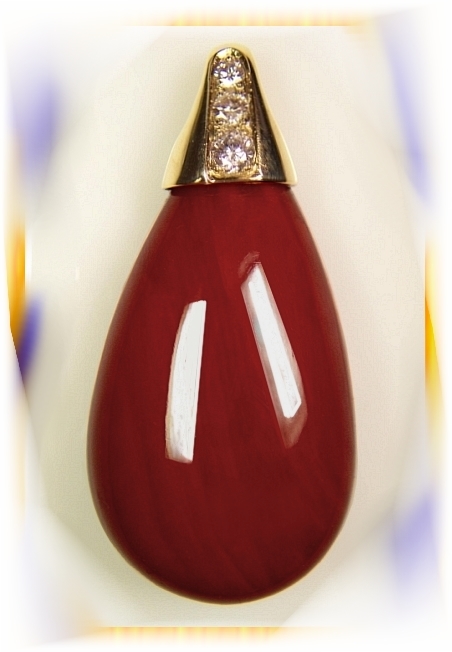
I do not think you will find another, high
quality, ox-blood coral pendant like this one, anywhere else.
One-of-a-kind, high quality piece. The Mediterranean coral itself weights a
whopping 22.21 cts., fine ox-blood red color, finely cut in a
pendeloque shape, measuring 24.5mm (length) x 15mm (wide), with a
18K yellow gold cap, accommodating any size chain, and with 0.10
cts. of clean, white diamonds,
bead set. This coral originates from the southern coasts of
Sardinia, Mediterranean Sea. The total length of pendant is 1 3/16"
long. If you like a super gorgeous, one-of-a-kind, like no other,
ox-blood coral pendant, this is the one for you to stand out
and enhance the power of Mars in your life. We do not have another
piece like this. The very best!
|
|
|
Red Coral Jewelry Care
The corals in this page are
completely untreated, of natural color (not dyed)
and no polymers filled.
Red coral is an organic
gemstones, high polished using a natural virgin wax and buffing combination. Therefore it will be subjected to loose its polish
over time. Red coral jewelry should be
taken off when showering or taking baths, if you want to preserve its shine as
long as possible.
Never clean your coral talismans in an
ultrasonic & steam cleaners. Never use detergent or bleaches or
baking soda or ammonia based products.
The shine of coral will fade off over
time. To preserve it as long as possible, every once in a while, rub
on top of red coral surface a fine wool fabric or silk fabric. Move
in circular motion, over the surface. An additional way. Take a wool
piece or silk piece, add a touch, half drop of oil, and rub the
coral surface with it. You must be careful not to mess with oil the
gold if mounted. Perhaps wrap the gold part with a bit of kitchen,
plastic wrap, if possible. This will make sure that the gold part is
protected and you can work the coral surface easier. This operation
will shine slightly your coral.
|
|
|
|
|
|

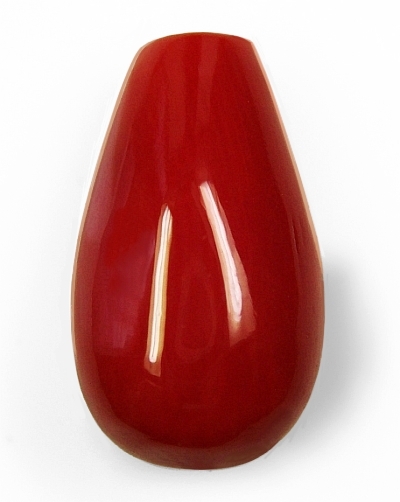
Like a drop of
blood, uniquely well shaped , rare, ox-blood Sardinia,
Mediterranean red coral pendeloque.
$90/ct
$715/gem |
A very unique, untreated, ox-blood, Mediterranean
coral, weighting 7.94 cts., medium-dark, fine, ox-blood red color,
uniquely shaped in a half-drilled pendeloque shape (half-drilled on
top), and measuring 15.33mm in length x 8.98mm wide x 8.11mm (tick),
clean surface with top mirror finish, from off the coasts of
Southern Sardinia, Mediterranean Sea. A beautiful pendeloque shape
that can be mounted with a gold cap (incorporating a small pin), for
a blood drop-like result. Completely natural, not dyed, this is a
high quality Italian coral for a special somebody. |
|
|
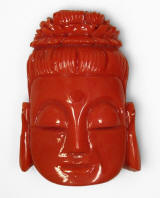
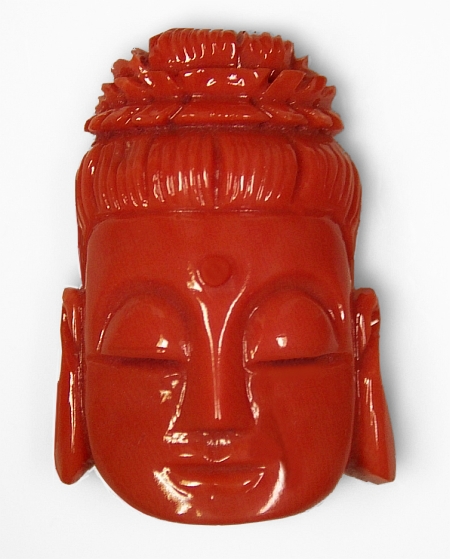
One-of-a-kind,
absolutely perfect, rare, untreated, Buddha, Pacific coral
carving. Only one.
$1,290/carving |
An one-of-a-kind,
spiritually compelling, coral "Buddha head" carving, weighting a
great 35.72 cts., medium "flame" orange color, very slightly pinkish in
undertone, measuring approx. 26 x 19 x 11mm, Pacific origin.,
with excellent carving details, clean surface and fine polish.
Carved in Torre Del Greco, Italy. This is from our last trip to the
"coral capital of the world". An absolutely, spiritually
unique, Pacific coral carving, with fine details and with an
overall, awesome feel to it. Certainly to make a
bespoke, one-of-a-kind pendant or just add it to your existing
collection as it is.
|
|
|
|
|
|
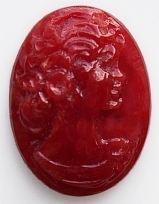
Uniquely beautiful,
feminine and one-of-a-kind, untreated, ox-blood coral cameo carving.
$100/ct
$538/gem |
During our last trip to
Torre Del Greco, we picked only one
piece (with the nicest color) of these gorgeous coral cameos. This
weights 5.38 cts., finest, ox-blood red color (completely untreated,
not dyed!), 12x16mm calibrated oval cabochon with exquisite carving
details. (pic is larger than actual piece...please, refer to
dimensions in mm). Coral is from Sardinia, Mediterranean sea and
engraved in Torre Del Greco, Italy. Nowadays, only a handful of
"incisori" (literally "engravers") in Torre Del Greco, are still
working the coral this way. It is an art that has been passed down
from father-to-son for centuries, but destined, unfortunately, to
disappear. This is a great, rare example of wearable art that is
sure to please and uplift the spirit! |
|
|
_small.jpg)
14K yellow gold,
ox-blood, Mediterranean coral "corno". Unique, very wearable,
protective talisman.
$300/pendant |
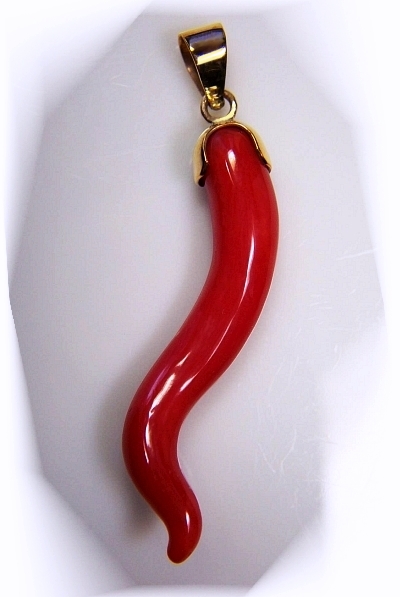
A beautiful & well crafted, 14K yellow gold & red
coral pendant, weighting 10.23 cts. total (red coral itself
weighting 6.28 cts.), featuring a free form, ox-blood coral, with
top high polish from off the coasts of Sardinia, Mediterranean sea.
If you are looking for something unique and totally natural, here is
something for you. The "cornuto", "corno", or "cornicello" is an
Italian amulet of ancient origin. "Corno" means "horn", and this
name refers to a long, gently twisted horn-shaped amulet worn in
Italy to protect against the evil eye.1 1/8" long (approx. 28mm
including the bail) and it is crafted of 14K yellow gold and
natural, not dyed coral. We have few more
of these....real, real nice! |
|
|
|
|
|
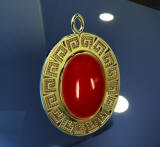
Astrological pendant talisman for
Vedic red corals. Set yourself apart.
~Made to order~
|
Our ultimate goal is to create powerful, well
balanced & beautiful talismans for Vedic astrology & healing. What
about this "Greek" inspired pendant? All of our talismans are hand
crafted to perfection, and we always strive to give everyone
something that is personalized & unique. Every custom piece, even
though follows the main design, will have invariably something
unique & different from the previous (be size of granulation,
slightly different spacing, 1 tier or two tiers around center gem,
etc.). Can do it in any color gold, yellow, white or rose. And can
do it for any size coral. Set your self apart. |
|
|
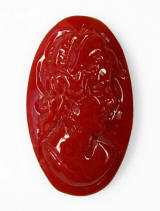
Rare & unique,
gently imposing, untreated, Mediterranean red coral cameo
carving. No
reserve.
$100/ct
$624/gem |
We are the only gemstone
company in USA to carry hand-made, red coral cameos, hand-carved in Torre Del
Greco, southern Italy. This beautiful & compelling piece weights
6.24
cts., top, finest ox-blood red color, slightly elongated, oval cameo
cabochon, measuring 18.7x11.1mm, artistically executed with
exquisite carving details, top texture & polish, from off the coast
of Southern Sardinia, Mediterranean Sea and carved in Torre Del
Greco, Italy. A very compelling cameo with top ox-blood color and
fine finish. It will make an unique pendant or ring, perhaps with an
"antique" motif...ask for a custom designed talisman. |
|
|
|
|
|
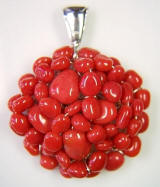
Uniquely beautiful,
Italian made, Pacific & Sardinian-Mediterranean red coral & sterling
silver pendant.
Smaller version.
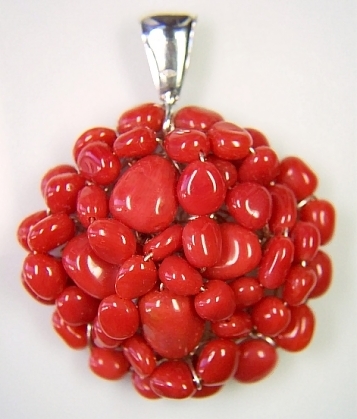
$290/pendant |
A
smaller version of the pendant on the right. This red coral &
sterling silver pendant weights 54.93 cts. total weight, crafted in
Torre Del Greco, Italy, and featuring a network of Pacific &
Mediterranean red coral nuggets, all natural & untreated, with very
good red color, with a slightly orangish tone. Pendant is 1 5/8"
long (including the bail) and 1 3/8" wide. With all the red coral
advertised
on-line, very little of it is completely natural and of good red
color. Contrary to common beliefs, it is a gemstone that is
depleting at a very fast pace, and start to commend higher and
higher prices.
This red coral pendant can be used for
astrological benefits as well. |
|
|
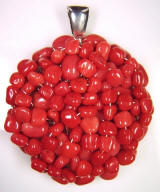
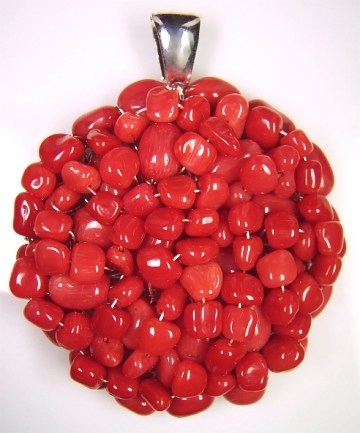
Absolutely gorgeous,
Italian made, Pacific & Sardinian-Mediterranean red coral & sterling
silver pendant. No reserve.
$590/pendant |
You have to see this in real life. Simply
gorgeous. This red coral & sterling silver pendant weights over 110
cts. total weight, crafted in Torre Del Greco, Italy, and featuring
a network of Pacific & Mediterranean red coral nuggets, all natural
& untreated, with very good red color, v.slightly orangish in tone.
The pendant itself is 1 3/4" wide and 2" long (including the bail).
Adorn yourself with a gorgeous, natural, red coral piece that is
malleable, easy to wear, and eye awesome. Only one, for a fortunate
& charismatic person. This red coral pendant can be used for
astrological benefits as well. |
|
|
|
|
|
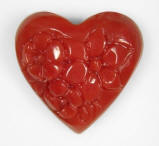
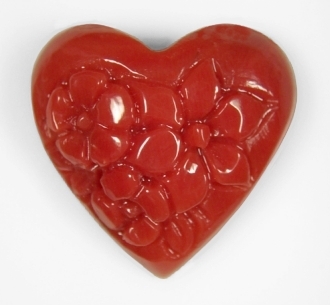
Large, hard to find
size, one-of-a-kind, Mediterranean coral floral carving. For
that special jewel.
$75/ct
$983/gem |
Very fine,
unique, red coral flower carving, one-of-a-kind
because of its huge size and uniqueness. It weights 13.10
ct., medium, ox-blood, red color, excellent carving details,,
18x15mm, smooth finish and texture.
Rare all the way. In a huge parcel from a "corallaro" in Torre
Del Greco, Italy, saw just this only heart shape.
This is truly a one-of-a-kind, heart carving,
with beautiful texture, excellent proportions and huge,
hard-to-get
size, priced well for its rarity!
Anyway, priceless that is. |
|
|
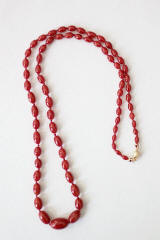
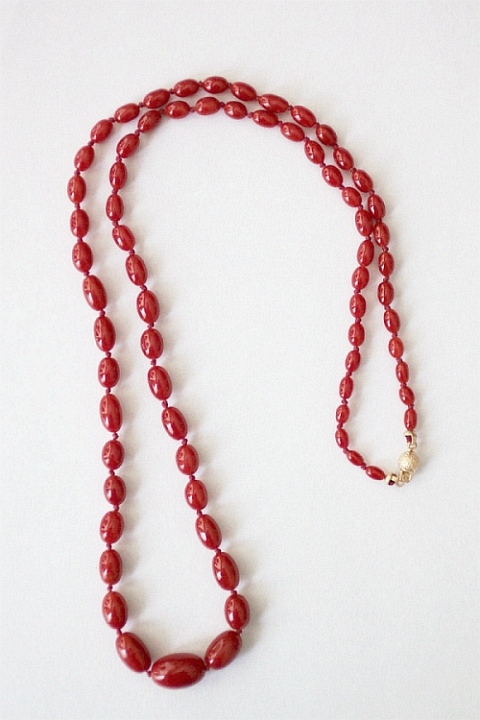
Simply very elegant,
absolutely beautiful, 14KY gold Mediterranean" olive-shape
ox-blood necklace. Very low reserve.
$1,180/necklace |
A superb, unique, and very elegant, high quality,
ox-blood coral necklace, 21" long, 75 cttw. of absolutely gorgeous,
natural color, untreated (no dyed, no polymers filled) ,
Mediterranean ox-blood coral, "olive" shape beads, individually
knotted/strung in a silk/nylon red cord and ending in a 14KY gold,
satin finish, 5mm bead clasp. This unique "olive" shape coral
necklace is manufactured by only one cutter in Torre Del Greco,
Italy and destined exclusively to the Japanese market. In addition
to the elegantly unique shape of the beads, this coral is of top,
ox-blood color and not treated whatsoever in any way. This is the
last necklaces left, and we assure you they wear extremely well and
show off really rich, elegant and of the highest quality. Great,
one-of-a-kind gift for yourself or your dearest one. |
|
|
|
|
|






.jpg)