|
|
Quality And Value Of
Gemstones in Today's Market | planetarygems.com
Becoming an educated consumer is not
such an easy matter when dealing with all the variables related to the purchase
of a colored gemstone.
These
many variables will determine the quality, therefore the price.
In general,
the quality and value of a gemstone is determined by a combination of what are
called the "Four C's":
Color,
Clarity
(degree of flawlessness),
Cut
and
Carat
weight.
Treatments
also should be added to the list, as they play a very important role in today's
evaluation of quality and price. As a general rule, If a stone is left untreated, in a nowadays
market filled with treatments of all sorts, it acquires a very substantial value over a
gem that has been treated.
What does unheated
and untreated mean?
Clarity
is the degree of flawlessness. As a
general rule, a clear transparent gemstones with no
visible flaws is the most valued.
GIA (Gemological Institute of America) classifies colored gems clarity of
three types:
Type 1 gemstones, "virtually inclusion-free" such as aquamarine, topaz,
green tourmaline, tanzanite, citrine, damburite.
Type 2 gemstones, "usually included" such as rubies,
all color sapphires, garnets, peridots, amethysts, zircons, cat's eye chrysoberyls, pearls, corals.
Type 3 gemstones, "always included", such as emeralds and red
tourmalines.
Some gemstones are valued for their inclusions. Phenomenal gemstones owe their
stars and eyes to inclusions. Tiny inclusions reflecting back light put the eye
in the so called "cat's eye"
and the "star" in the star
sapphire. Inclusions can also be a birthmark, telling us where a particular
gemstone was mined.
As a general rule,
look for eye flawless stones. If the inclusions are too numerous, too visible to
the naked eye and/or distracting, avoid such stones.
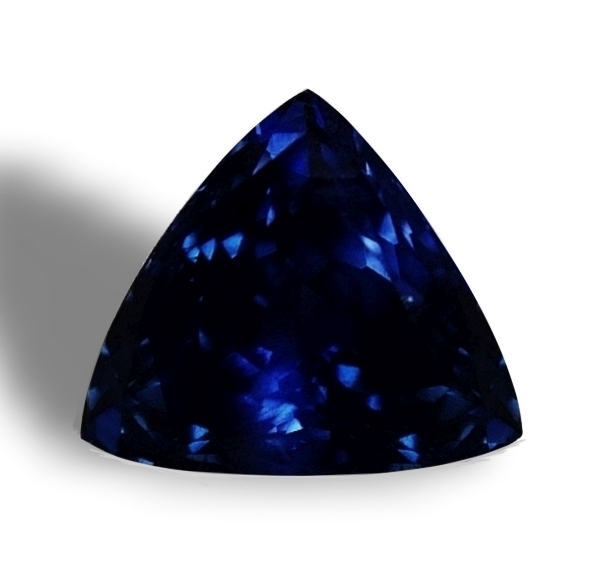
Color is another key factor. A common misperception in
judging gems is
that people assume that the darker the color, the
better the stone. That isn't true: color can be too dark, like some
"blue" sapphires that look more black than blue.
See pic on the left.
|
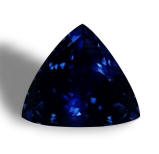
Overly dark blue sapphire. Lower quality. |
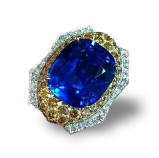
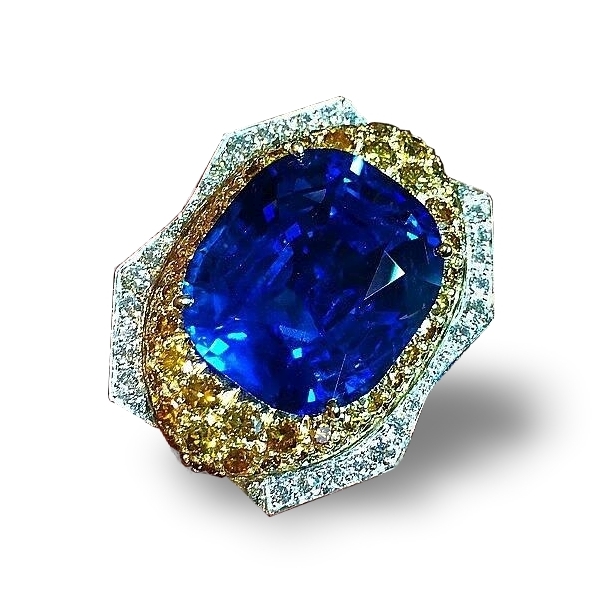
Deep, vivid blue color.
High quality. |
If a gem's color is
too dark, it is subdued and lifeless. A much better rule of thumb is
the brighter and more rich and vivid the color, the better. In
general, within each gemstone variety, a clear, medium
to medium-dark tone, very intense and saturated primary color is the most
preferred. See pic on the right. Muted colors or colors between hues, which you might find
very attractive, are usually a bit less expensive. Look at the color in
different kinds of light. Gemstones change naturally
intensity and hue color depending on the light environment (daylight
with sun, cloudy, incandescent light, which will be a thing of the
past soon, and different fluorescent light environments).
Of note are the color change stones, where in daylight, a gem shows one color
and in artificial light another one. This color change gems are usually
very attractive and in most case expensive. (alexandrite
is the most well known example, but sapphires,
garnets, and occasionally spinels can also change color).
Let's
talk about the cutting in a gemstone. It use to be that a good
Cut
was something that did
not cost more. Nowadays, a good cut stone is worth
more than a badly cut one. A savvy consumer knows that a well cut
gemstone can add or subtract a lot of
beauty.
And beauty (together with rarity and freedom from
enhancement...basically) is what we pay in a gemstone.
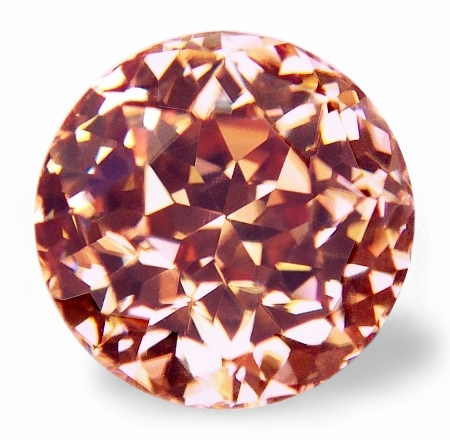
A well-cut,
faceted gemstone reflects light back
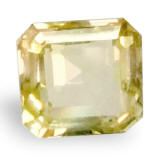
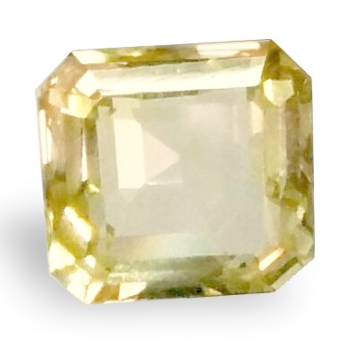
Windowed sapphire. Brilliance will be subdued. |
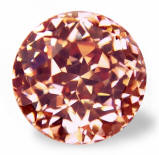
Perfectly cut, natural pinkish-orange zircon.
Exceptionally brilliant. |
evenly across its surface
area when held face up. If the stone is too
deep and narrow, areas will be dark. If it is too shallow and wide, the stone will be
washed
out and lifeless (the so-called window, see stone sample on
the left). The best way to judge cut is to look at similar gemstones next to
each other.
The weight of a gemstone is
measured in Carats and points. There are 100 points
in one carat, and 1 carat equals to one-fifth of a gram. As a rule, the price increases per
carat as we go from smaller to larger stones, since the larger stones are more limited in
supply. However, the price does not increase proportionately - there are disproportionate
jumps. And the larger the stone (all else being equal in terms of overall quality), the
more disproportionate the increase in cost per carat may be.
Fair
Cost:
Here we could go on and on for days
and days about the value of a gem. In the end, this is the dilemma, not only
in purchasing a gemstone, but in choosing or evaluating everything in life.
What is the real value? Simply said, the exact cost of a stone should depend
on its beauty, rarity and, of course, a combination of the 4Cs .
|